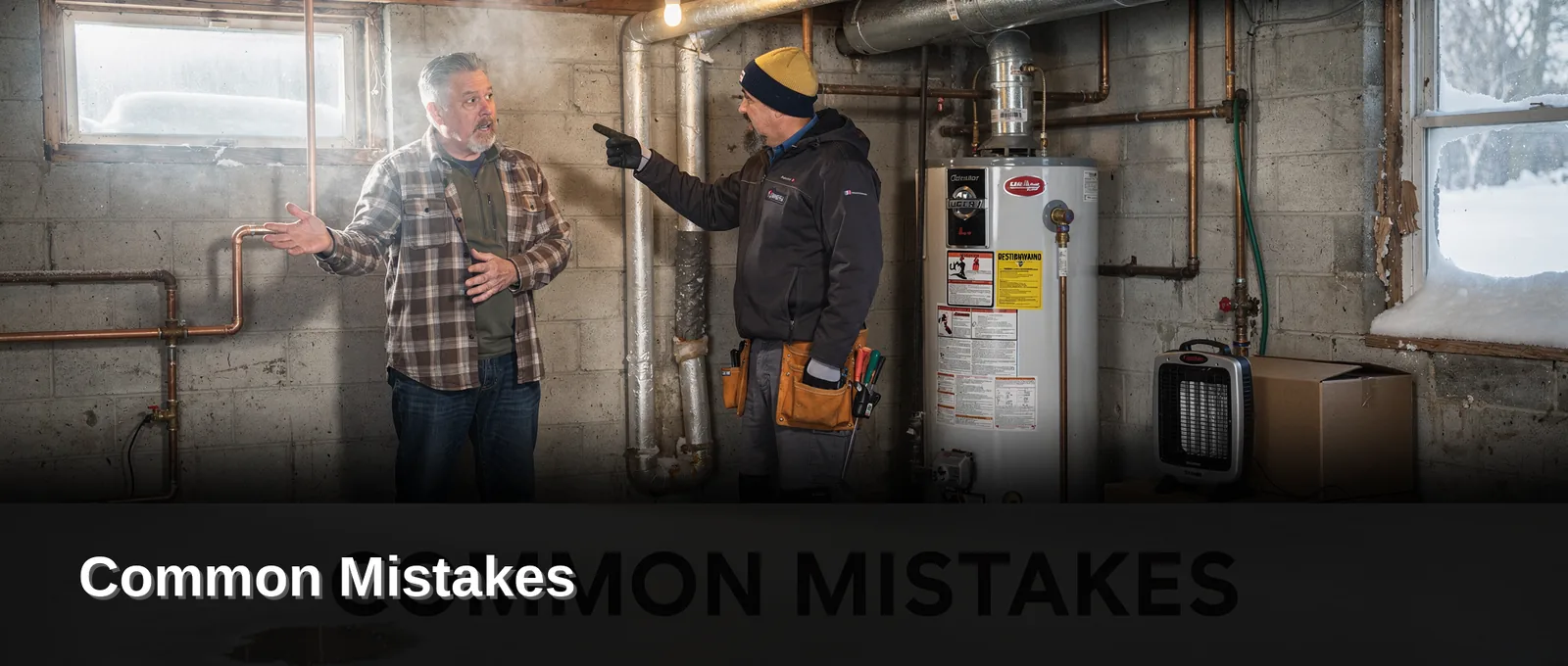
Common mistakes in commercial HVAC across New England include undersizing equipment for winter heating loads and neglecting economizer maintenance for humid summer conditions. Corporate Mechanical of New England, LLC designs systems for Massachusetts commercial buildings, emphasizing proper load calculations and seasonal commissioning to prevent energy waste and reliability failures.

Key Takeaways

  • Undersizing equipment for winter heating loads and neglecting economizer maintenance for humid summer conditions are common commercial HVAC mistakes in New England.
  • Inadequate freeze protection ranks among the costliest oversights, with a cracked heat trace cable or stuck outside air damper escalating into ruptured coils.
  • Economizer mismanagement produces energy waste from dampers that open too early or stay open too long, inflating utility bills.
  • Deferred seasonal inspections before peak heating or cooling seasons cause most major commercial HVAC failures in New England.

Is your freeze protection adequate for New England winters?

Inadequate freeze protection ranks among the costliest oversights in commercial HVAC New England systems. A frozen coil or burst pipe rarely announces itself during business hours. The call comes at 7 p.m. on a Friday, with indoor temperatures already plummeting below 55 degrees and tenants walking out. Emergency repairs triggered by freeze damage cost far more than the preventive measures that stop them.

What causes freeze-related failures in commercial systems?

Freeze failures typically begin with small, overlooked vulnerabilities. A cracked heat trace cable, an uninsulated condensate line, or a stuck outside air damper exposes the system to subzero conditions. These minor defects escalate into ruptured coils and flooded mechanical rooms within hours of a cold snap.

Why do seasonal inspections matter for freeze protection?
Deferred seasonal inspections create the conditions for preventable winter breakdowns. Gino Passarelli, Vice President at GHC Mechanical, emphasizes that investment in preventive maintenance pays long-term dividends. A thorough pre-winter inspection identifies failing heat tape, low glycol concentrations, and damper seal gaps before temperatures plummet. Most major commercial HVAC Massachusetts failures start small. Early intervention and consistent maintenance stop them from becoming emergencies.

Are you mismanaging economizers during shoulder seasons?

Economizer mismanagement ranks among the most persistent errors in commercial HVAC New England installations. The problem hides well. A system starts up cleanly, passes initial checks, and only reveals its flaws months later when spring or fall weather shifts. By then, facility directors face inflated energy bills and comfort complaints that trace back to decisions made during design and installation.

Why do economizer problems surface only after startup?

Mistakes made during a commercial HVAC installation often stay invisible until the system runs through a full seasonal cycle. A newly installed unit appears functional at commissioning. Underlying control issues emerge later, when outdoor air temperatures swing between heating and cooling demands. These early decisions directly influence energy efficiency, long-term energy costs, system reliability, and indoor temperature control.

What happens when economizer controls fail during shoulder seasons?

Poor economizer control produces two costly outcomes in commercial HVAC Massachusetts buildings:

  • Energy waste from dampers that open too early or stay open too long
  • Temperature swings that force occupants to file comfort complaints

Facility directors lose budget dollars to utility overruns and lose staff productivity to unstable indoor conditions. Neither loss shows up on a startup report.

How does proper design prevent economizer failures?
Accurate load calculations factor insulation values, glazing and orientation, occupancy and plug loads, and local climate. Sizing based on square footage alone invites trouble. A thorough design process stabilizes operating conditions and prevents the performance issues that surface during New England’s shoulder seasons. Building owners exploring broader system improvements should review building automation trends that support better economizer sequencing.

Are you skipping seasonal inspections before peak demand?

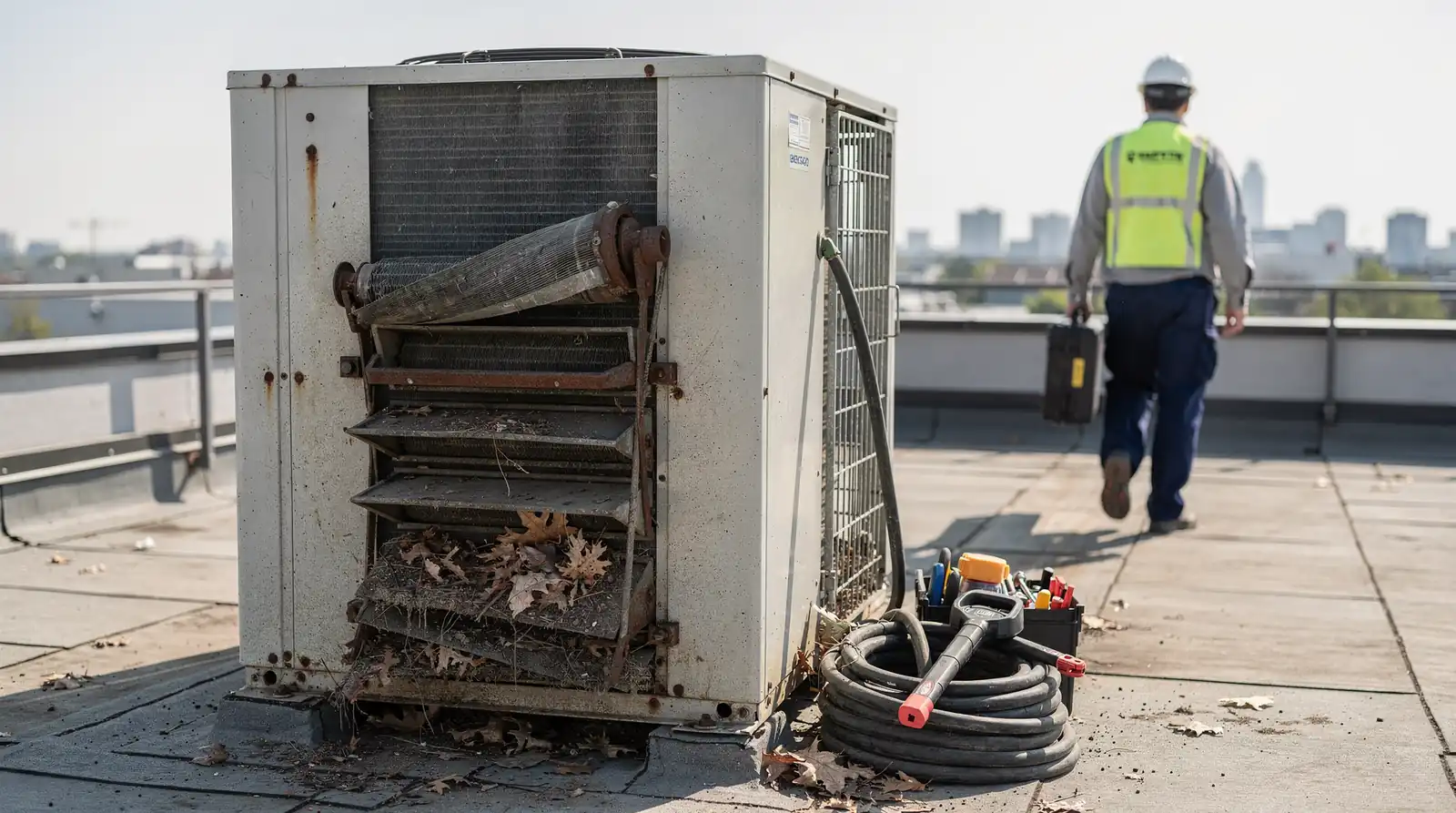
Deferred seasonal inspections before peak heating or cooling seasons are a leading cause of commercial HVAC failures in New England. A system that runs without a pre-season check often hides small problems that escalate into major breakdowns. Facilities Dive identifies this pattern as one of the five most common commercial HVAC failures, noting that most major issues start small and remain invisible until the system is under full load. By the time a facility director notices the dining room hitting 78°F on a Friday evening, the damage is already done.

Commercial HVAC New England systems face extreme seasonal swings. Winter demands relentless heating output. Summer pushes cooling equipment to its limit. Skipping the spring or fall inspection invites failures exactly when the building needs performance most.

What happens when seasonal inspections are deferred?

Routine maintenance and early intervention reduce emergency repair costs and extend equipment life. Facilities Dive reports that proper ongoing maintenance extends equipment life. The alternative is stark. An emergency truck roll costs roughly ten times what a scheduled service call would have cost. That differential erodes operating budgets and forces capital replacements years ahead of schedule.

How do proactive inspections protect commercial HVAC Massachusetts facilities?

Proactive inspections ensure system reliability and indoor comfort for commercial HVAC Massachusetts facilities. A thorough pre-season review catches worn belts, low refrigerant, and failing controls before they cascade into tenant complaints. Corporate Mechanical of New England provides comprehensive service and maintenance that stabilizes system reliability and reduces the frequency of costly repairs. The result is predictable performance when outdoor temperatures hit their extremes.

FAQ

What causes freeze-related failures in commercial systems?

A cracked heat trace cable, uninsulated condensate line, or stuck outside air damper exposes the system to subzero conditions, escalating into ruptured coils and flooded mechanical rooms.

Conclusion

Avoiding these common mistakes requires a deliberate shift from reactive repairs to proactive management. Facility directors who invest in pre-season inspections, accurate load calculations, and proper freeze protection eliminate the root causes of emergency breakdowns. This approach stabilizes operating costs, extends equipment life, and ensures reliable indoor conditions through every New England season.