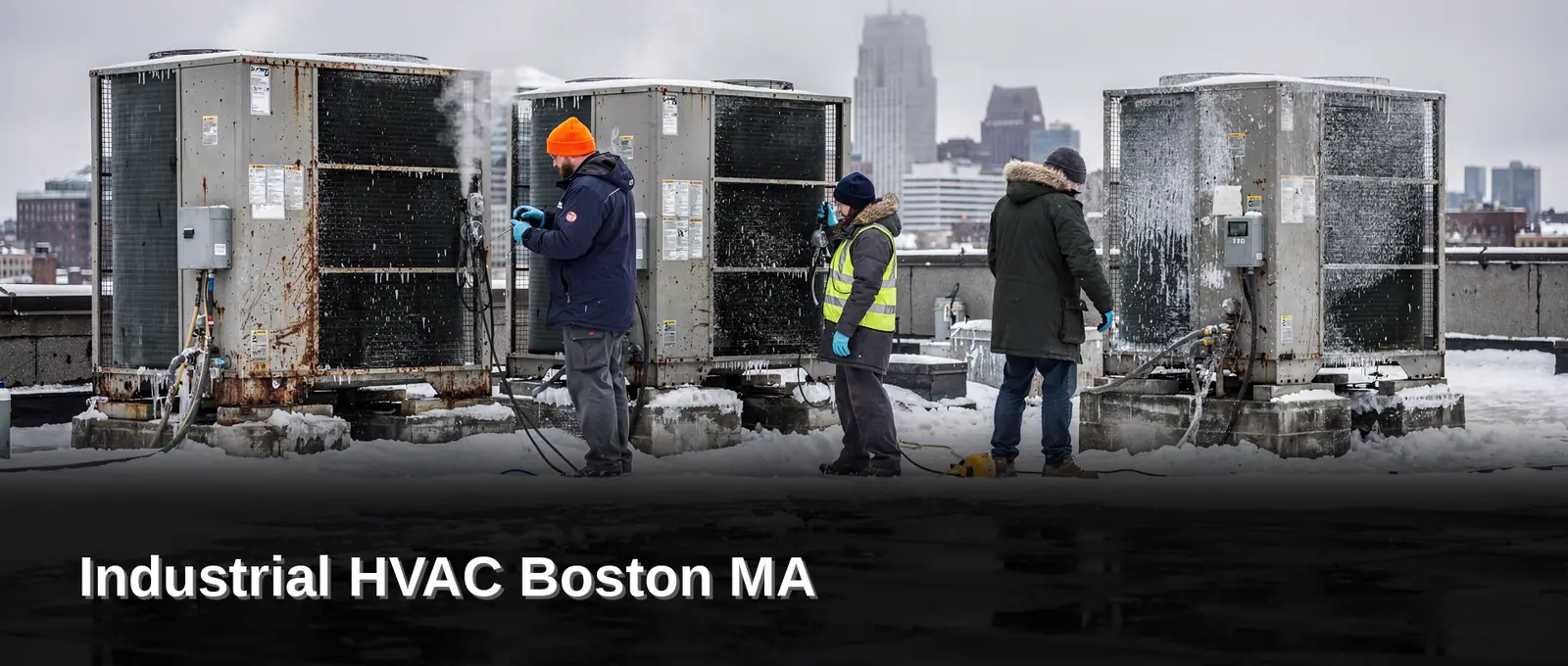
Industrial HVAC best practices in Boston, Massachusetts prioritize preventative maintenance and system optimization to ensure reliable performance in demanding industrial environments. Corporate Mechanical of New England designs and maintains these systems, drawing on decades of experience to deliver efficient, economical solutions. A proactive approach protects uptime and extends equipment life for manufacturing and commercial facilities throughout the greater Boston area.

Key Takeaways

  • Boston's coastal location and freezing winters create punishing conditions that accelerate industrial HVAC equipment wear and drive up energy consumption.
  • Preventative maintenance programs catch stress cracks and seal failures early before thermal expansion cycles fatigue components years ahead of inland installations.
  • Production downtime often exceeds the repair bill itself.
  • Automation provides an early warning system through zone-based controls and building management platforms that track performance trends across weeks and months.

What makes Boston's climate hard on industrial HVAC?

Boston’s coastal location and freezing winters create punishing conditions for industrial HVAC Boston MA systems. Salt-laden air corrodes outdoor coils and heat exchangers. Sub-zero temperatures strain compressors and freeze condensate lines. These factors accelerate equipment wear and drive up energy consumption. Without specialized design and maintenance, facilities face unplanned downtime during peak heating or cooling seasons.

Why does coastal humidity damage industrial HVAC equipment?

Moisture and salt combine to attack metal surfaces relentlessly. Condenser coils corrode faster near the harbor. Electrical connections degrade under constant exposure. Heat exchangers lose efficiency as corrosion builds. Mechanical contractors New England firms address this with coated coils and stainless-steel cabinets. Regular wash-down protocols remove salt deposits before pitting begins.

How do Boston's temperature swings affect system reliability?
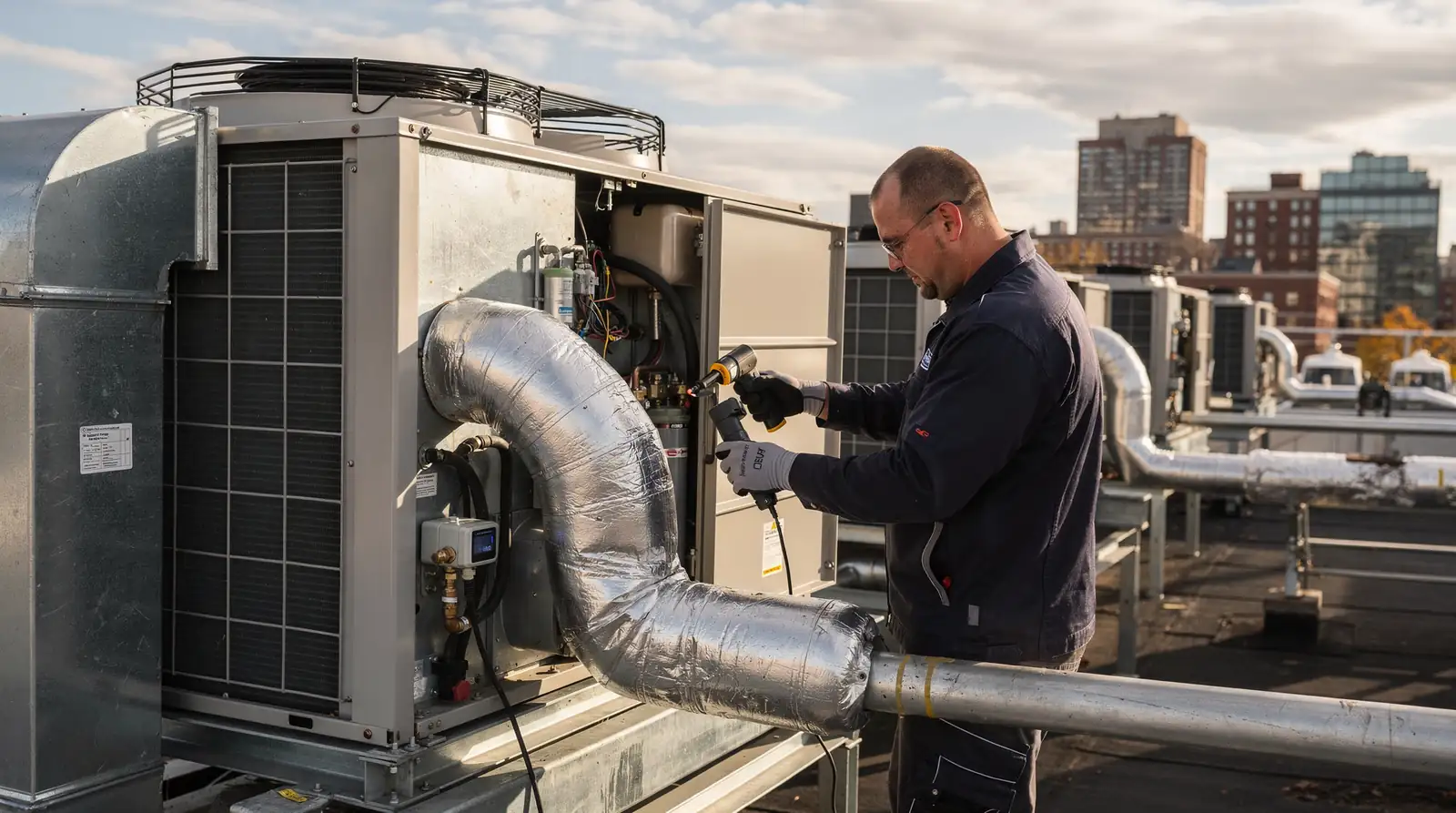
A single week can swing from single digits to above freezing. Thermal expansion and contraction stress piping joints and ductwork. Refrigerant pressures fluctuate beyond standard operating ranges. These cycles fatigue components years ahead of inland installations. Preventative maintenance programs catch stress cracks and seal failures early. Seasonal commissioning adjusts setpoints for each transition period.

Boston’s regulatory environment adds another layer. Massachusetts energy codes and BERDO requirements mandate strict efficiency benchmarks. Industrial facilities must balance compliance with operational demands. Systems designed for peak efficiency under code often run harder during extreme weather. Corporate Mechanical of New England integrates code-compliant design with climate-specific hardening. The approach follows best practices for building systems in Boston MA that prioritize both compliance and durability.

How can seasonal maintenance prevent costly breakdowns?

Seasonal maintenance prevents catastrophic equipment failures by catching small problems before they escalate. A neglected industrial HVAC system in Boston faces two punishing extremes: winter freeze-ups that burst coils and summer humidity that overwhelms cooling capacity. Industrial HVAC Boston MA systems operate under relentless demand, and deferred upkeep turns minor wear into multi-day outages. The financial impact hits hard. Production downtime compounds the loss, often exceeding the repair bill itself.

What does a seasonal maintenance inspection actually cover?

A thorough inspection addresses the components most vulnerable to seasonal stress. Technicians examine heat exchangers for cracks, test refrigerant pressures, clean condenser coils, and verify all safety controls. Belts, bearings, and electrical connections receive close scrutiny. The preventative approach protects uptime and extends equipment life. Facility managers who skip these checks risk discovering a failed chiller on the first 90-degree day.

Why do Boston winters demand specialized HVAC preparation?

Boston’s freeze-thaw cycles create unique risks for industrial heating systems. Condensate lines freeze. Gas valves stick. Rooftop units ice over, damaging fan blades and housings. Mechanical contractors New England firms like Corporate Mechanical of New England design maintenance protocols specifically for these regional challenges. The company constructs and maintains mechanical systems across Massachusetts, including the greater Boston and Metro West areas. Its technicians understand local code requirements and the operational demands of manufacturing floors, warehouses, and processing plants. A spring transition checklist, such as the one detailed in Corporate Mechanical’s guide on shifting from heating to cooling, helps facility managers avoid the scramble when temperatures swing.

How do smart controls reduce seasonal breakdown risk?
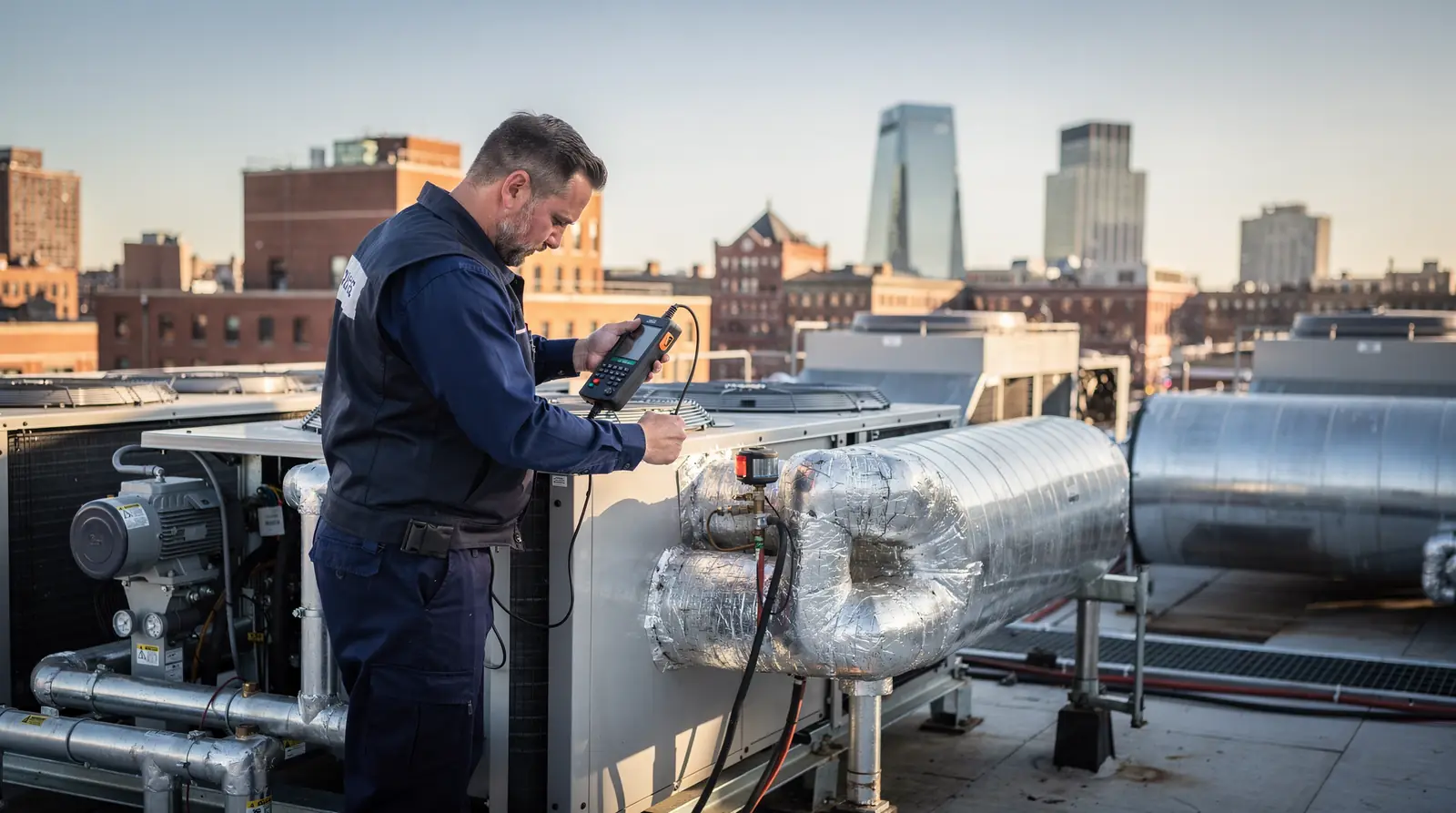
Automation provides an early warning system. Zone-based controls and building management platforms track performance trends across weeks and months. A gradual rise in compressor amp draw or a slow decline in airflow signals trouble long before a shutdown occurs. Corporate Mechanical of New England delivers efficient, economical solutions that provide comfort, control, and reliable performance. These systems alert operators to anomalies, enabling scheduled corrections instead of emergency interventions. The result is fewer surprises and predictable operating costs year-round.

Why work with local mechanical contractors in Boston?

Industrial HVAC Boston MA systems demand specialized expertise that only established mechanical contractors New England facilities trust can deliver. Downtime in an industrial setting halts production, erodes revenue, and strains client relationships. Local contractors eliminate these risks through rapid response and deep familiarity with regional building codes and infrastructure.

What specialized services do local contractors provide for industrial systems?

Corporate Mechanical of New England designs, constructs, and maintains mechanical systems with a focus on custom fabrication, precision ductwork, and comprehensive pipe maintenance. These services keep complex industrial HVAC equipment operating at peak efficiency. The company’s construction and service teams stand ready to mobilize for urgent project needs, minimizing operational interruptions for manufacturing and processing facilities.

How do safety certifications protect an industrial facility?

Partnering with contractors who hold rigorous safety credentials reduces liability and prevents workplace incidents. Reputable local teams maintain OSHA 30 certification and full compliance with health, safety, and environmental regulations. This commitment protects facility staff and ensures that every repair or installation meets strict legal standards. For ongoing system reliability, Corporate Mechanical of New England provides dedicated service and maintenance programs that extend equipment lifespan and control operating costs.

FAQ

What makes Boston's climate hard on industrial HVAC?

Boston’s coastal location and freezing winters create punishing conditions. Salt-laden air corrodes outdoor coils, and sub-zero temperatures strain compressors and freeze condensate lines. Thermal expansion and contraction stress piping joints and ductwork, fatiguing components years ahead of inland installations.

How can seasonal maintenance prevent costly breakdowns?

Seasonal maintenance catches small problems before they escalate, preventing winter freeze-ups that burst coils and summer humidity that overwhelms cooling capacity.

Conclusion

Boston’s climate and regulatory demands make seasonal maintenance a non-negotiable investment for industrial facilities. Facility managers who commit to scheduled inspections and local contractor expertise avoid emergency repairs, production downtime, and code violations. This approach delivers predictable operating costs and extends equipment life through every freeze-thaw cycle and humidity spike.